Select a route
All routes
| ID | km | Max depth | Pylons |
|---|
Design concept
Structural form
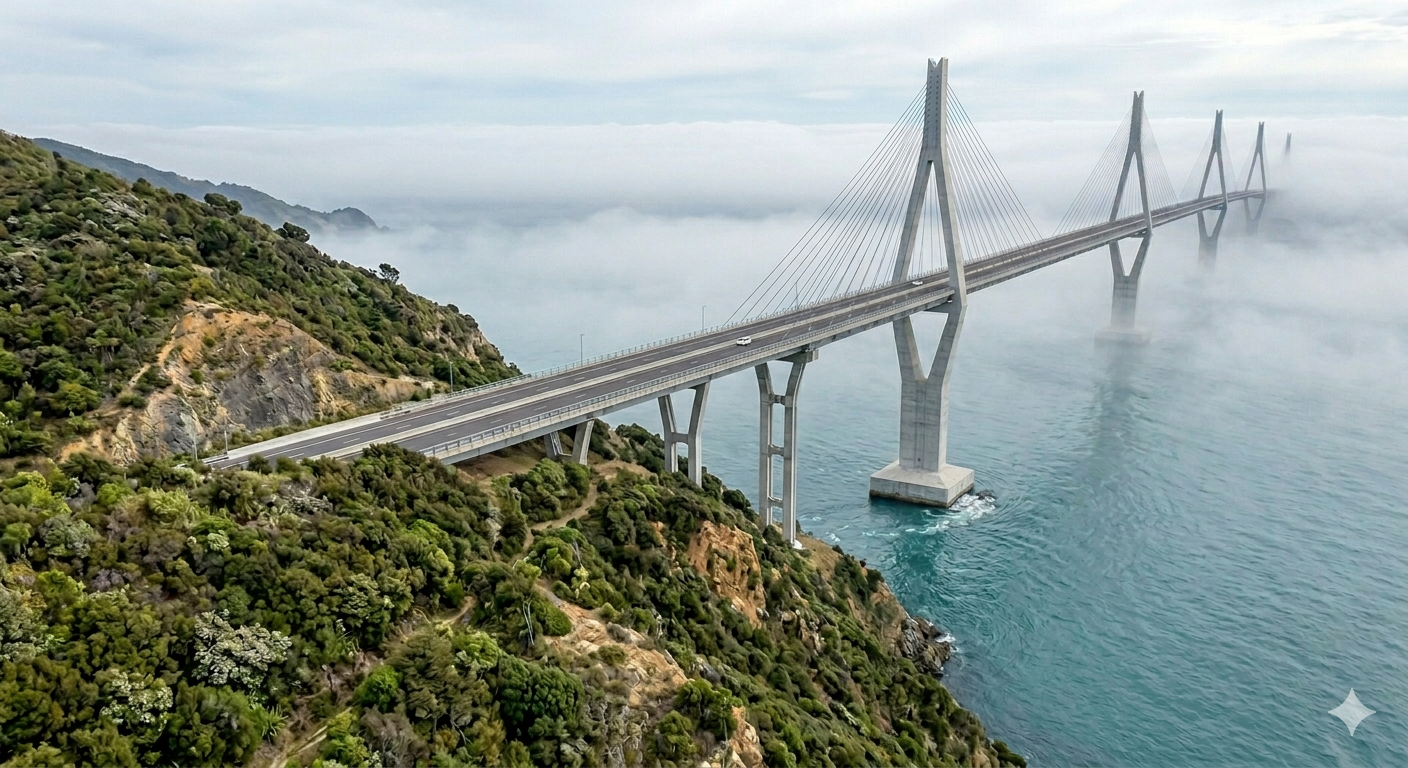
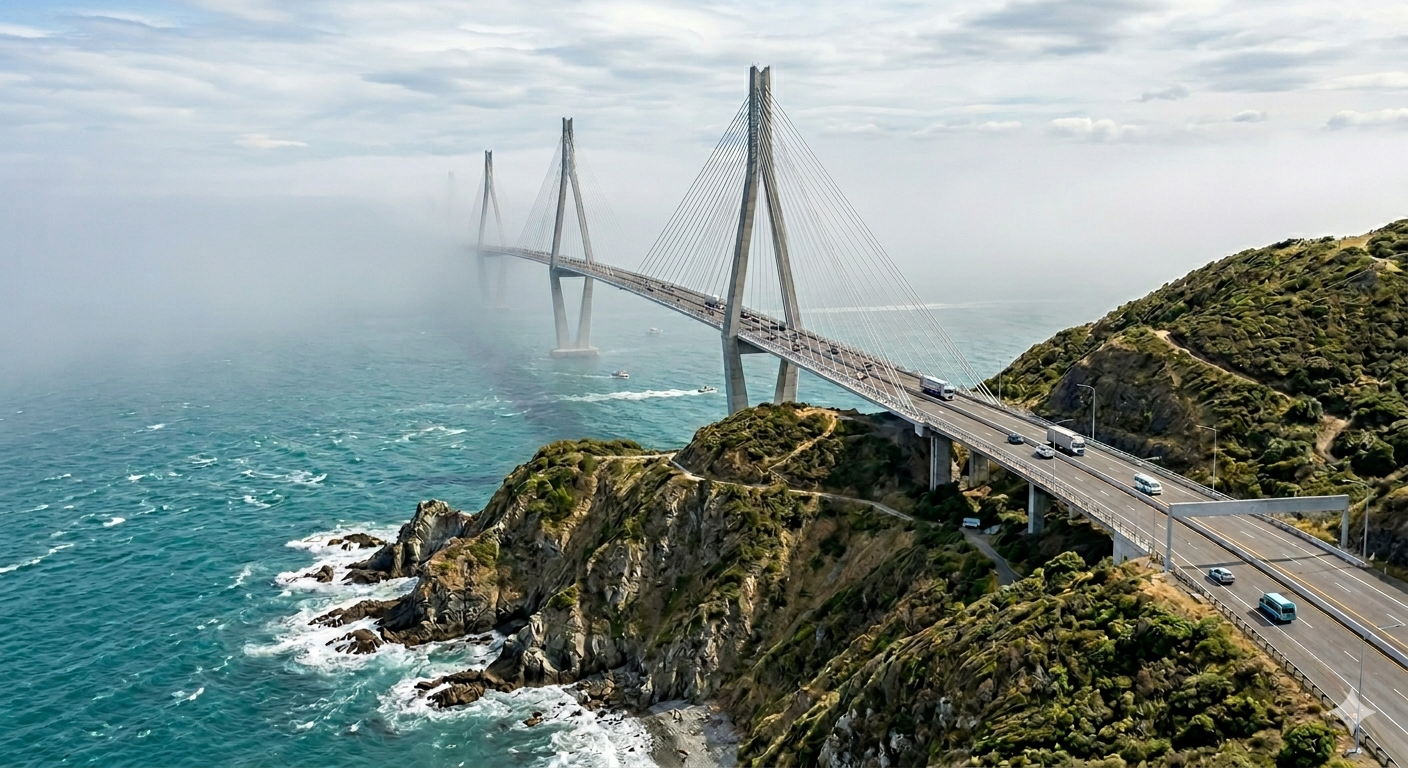
The proposed form is a cable-stayed / suspension hybrid. Cable-stayed sections (~600 m spans) handle the approaches across the shallower shelf on both sides. A single suspension span — up to 1,500 m — clears the Cook Strait Canyon where pylon foundations would otherwise need to reach 300 m below the seabed surface. This keeps the deepest, most expensive foundations to the canyon's edges rather than its floor.
Pylon fabrication at a deep-water construction facility in the Marlborough Sounds, where protected water, road access to labour and services in Nelson/Blenheim, and depths sufficient for float-out operations are available within a few kilometres of the southern landing.
Visualisations
Leaving West Head (South Island) and arriving at Terawhiti Station (North Island). Cable-stayed approach sections either side; single suspension span over the Cook Strait Canyon.
Reference designs
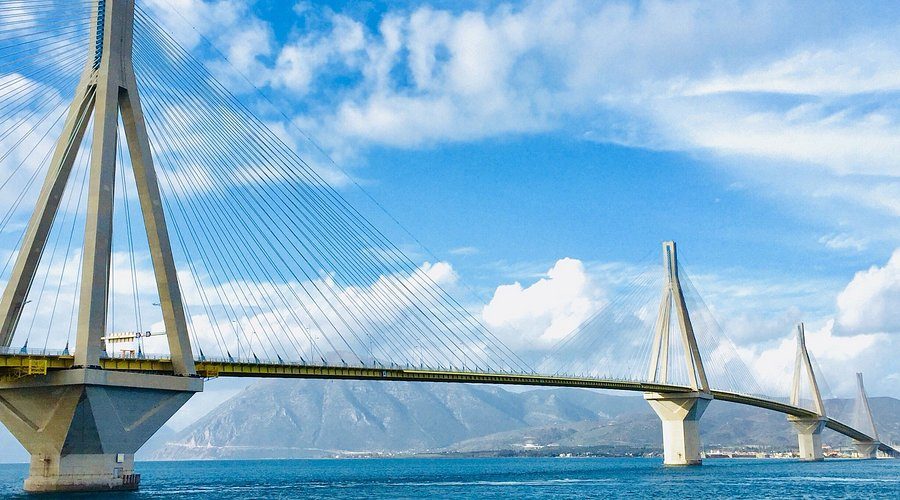
Rion–Antirion Bridge
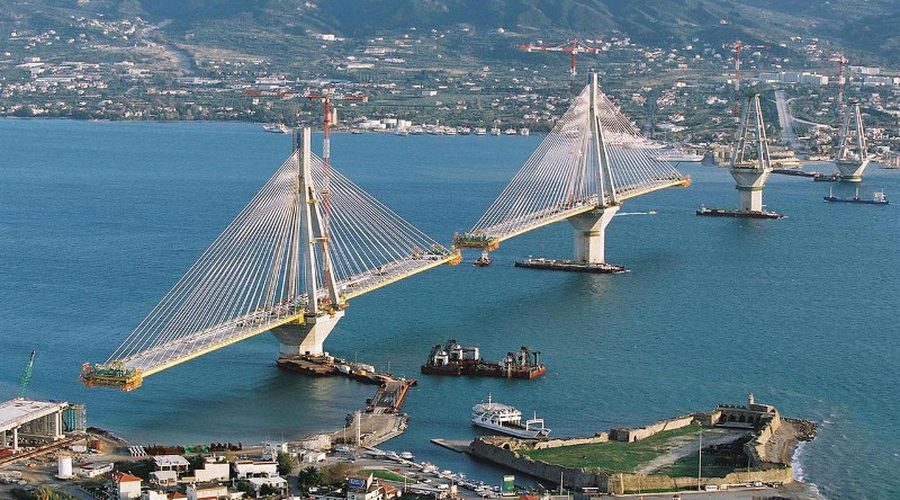
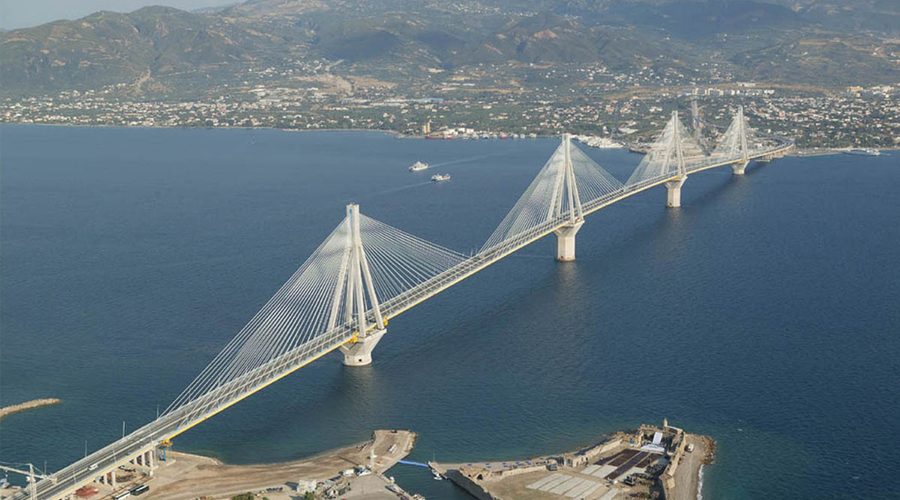
The most relevant precedent. 2.38 km of cable-stayed spans across the Gulf of Corinth, seismically active, seabed up to 65 m deep with soft sediment, open to wind and swell. Four 560 m spans; pylons founded directly on the seabed using a novel steel-skirt friction system rather than driven piles. Cook Strait has more exposure and much greater depth, but the Rion–Antirion approach — designing for mobility rather than fixity — is exactly the kind of thinking a Cook Strait crossing would require.
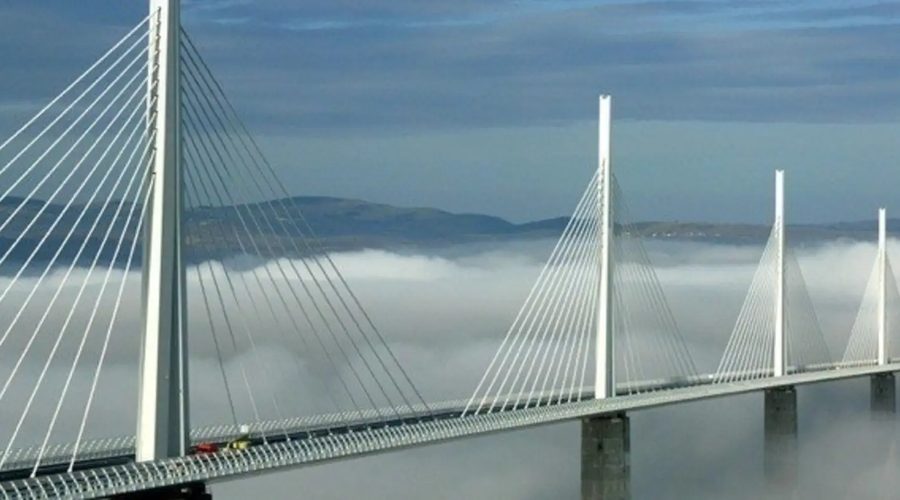
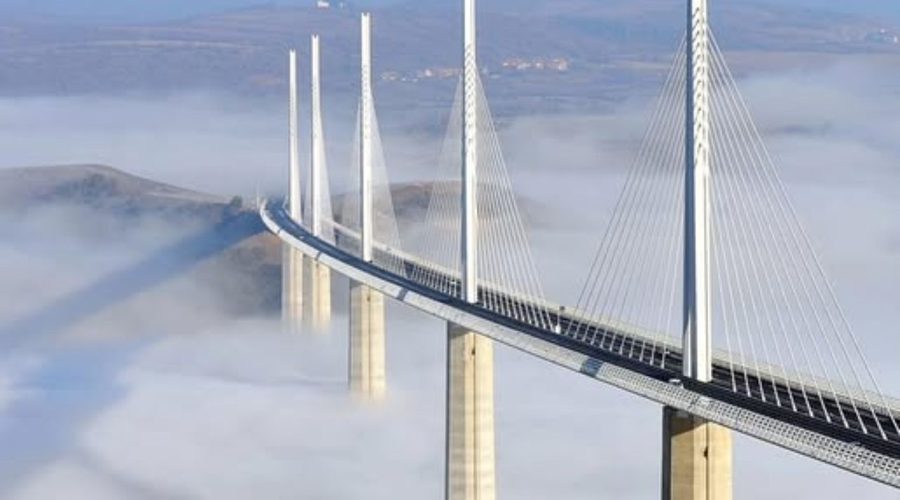
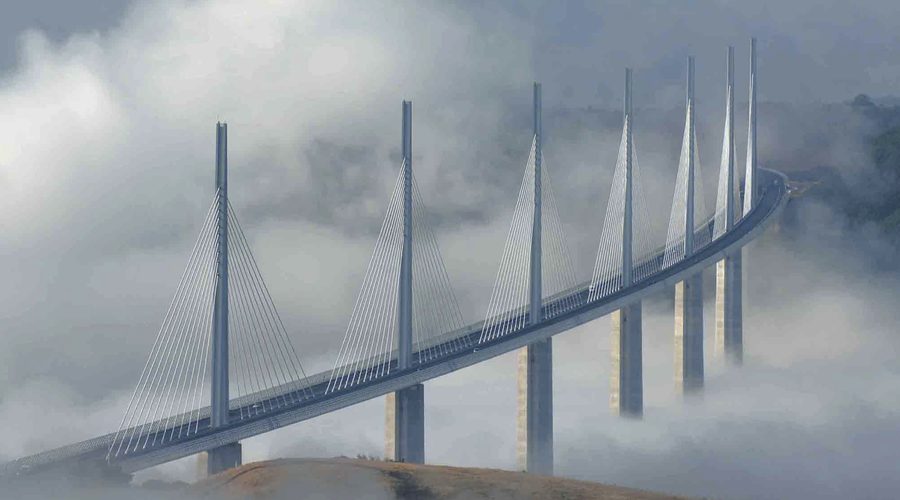
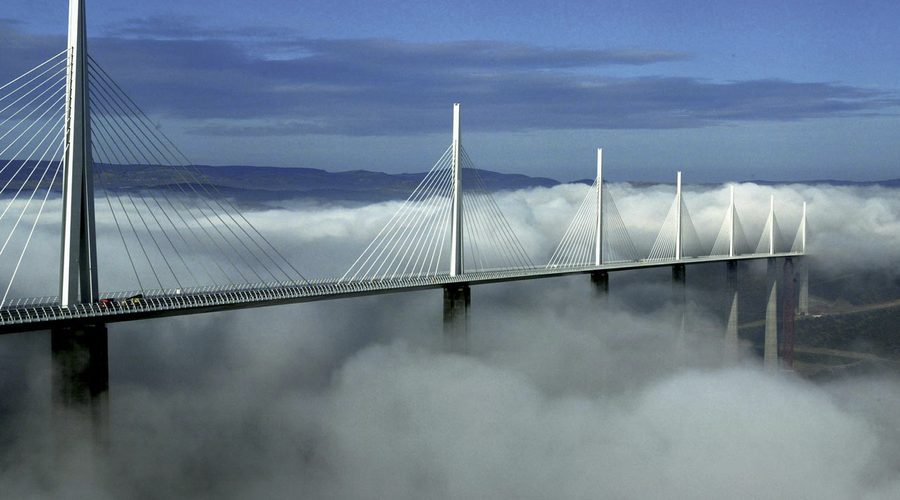
Millau Viaduct
Cable-stayed, 2.46 km long, 270 m pylons — the tallest vehicular bridge in the world. Spans up to 342 m. Demonstrates that very tall pylons in difficult terrain are routine engineering now. The pylons here are taller above ground than Cook Strait's are below water.
Great Belt East Bridge
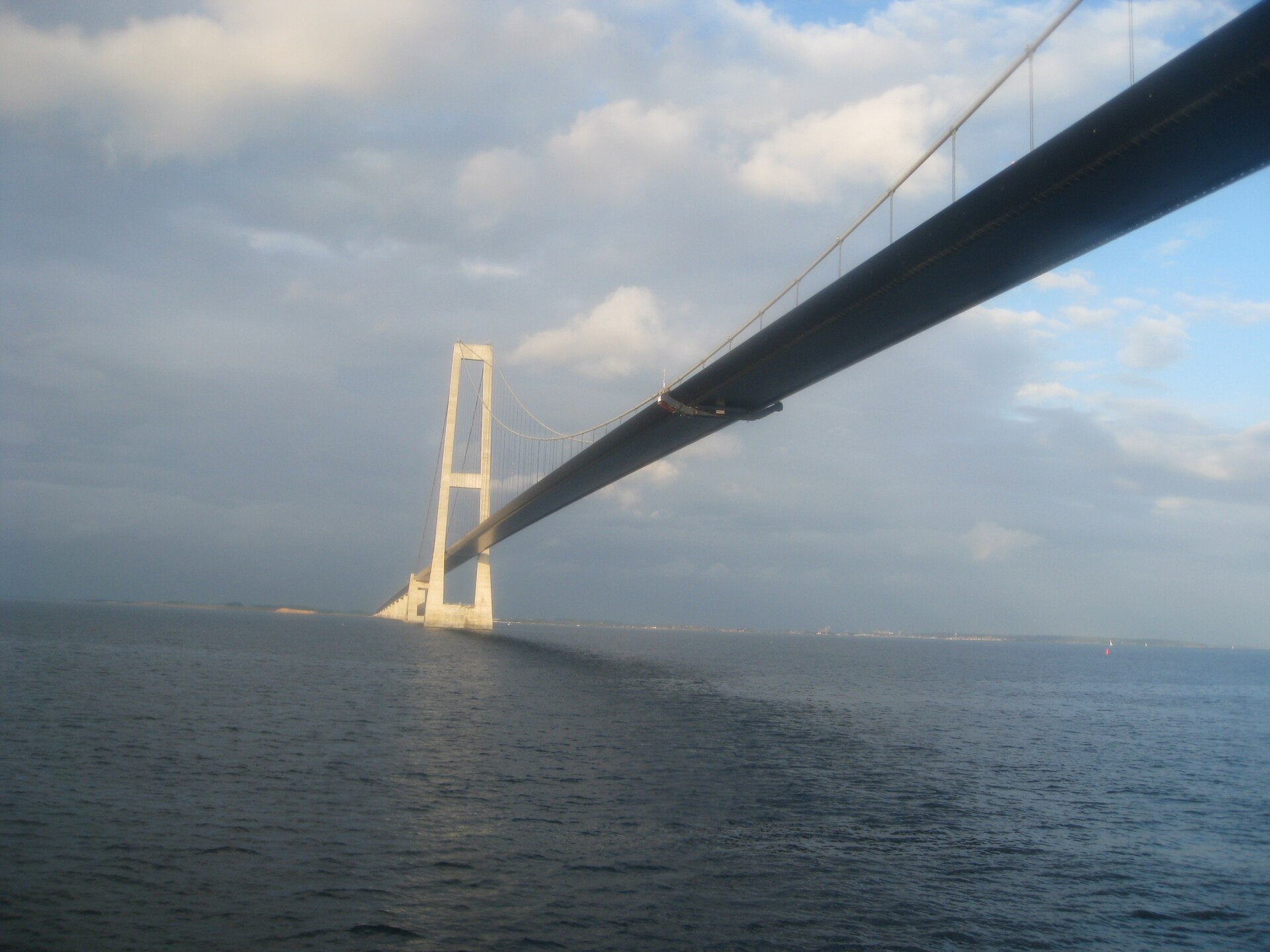
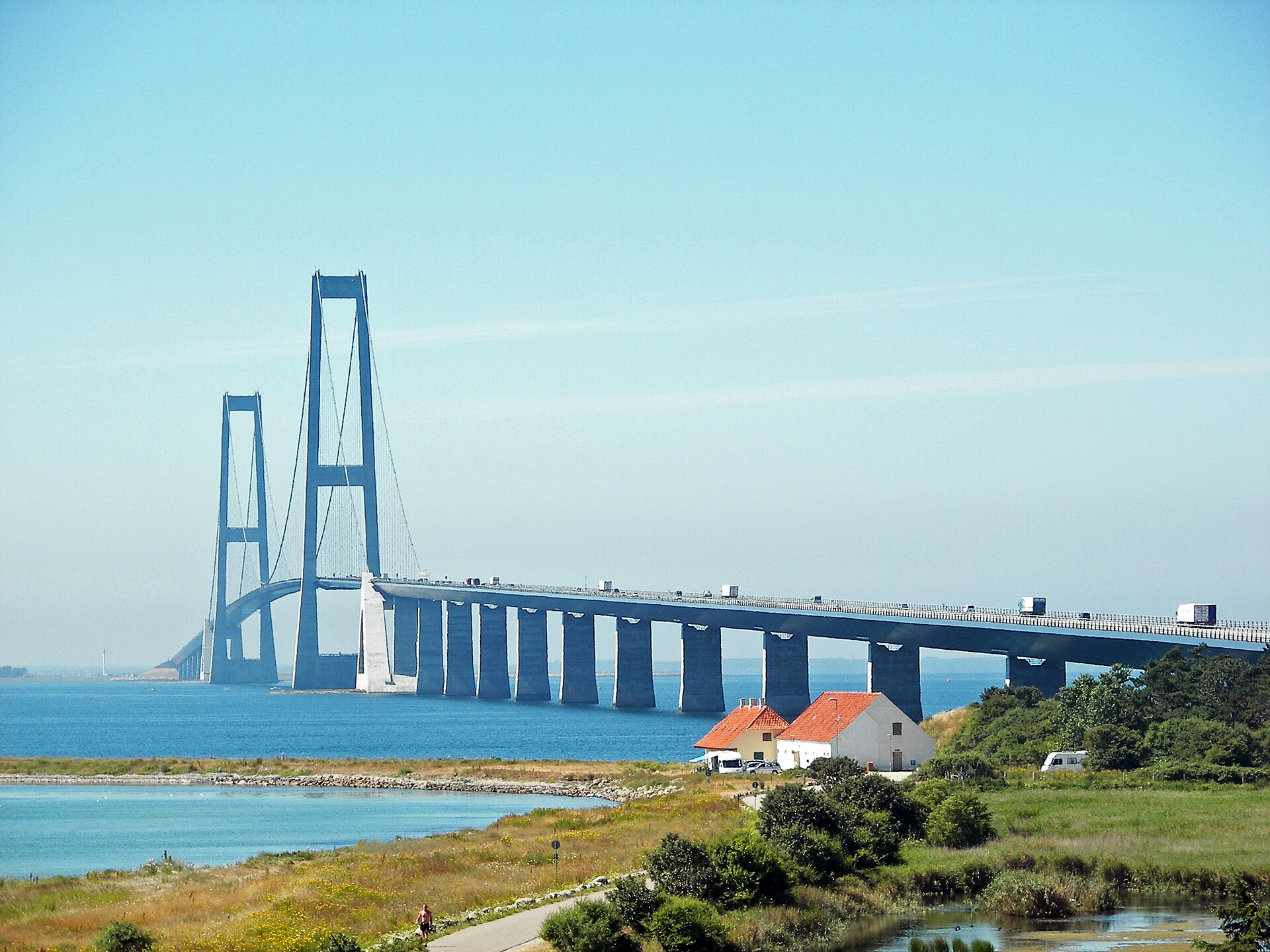
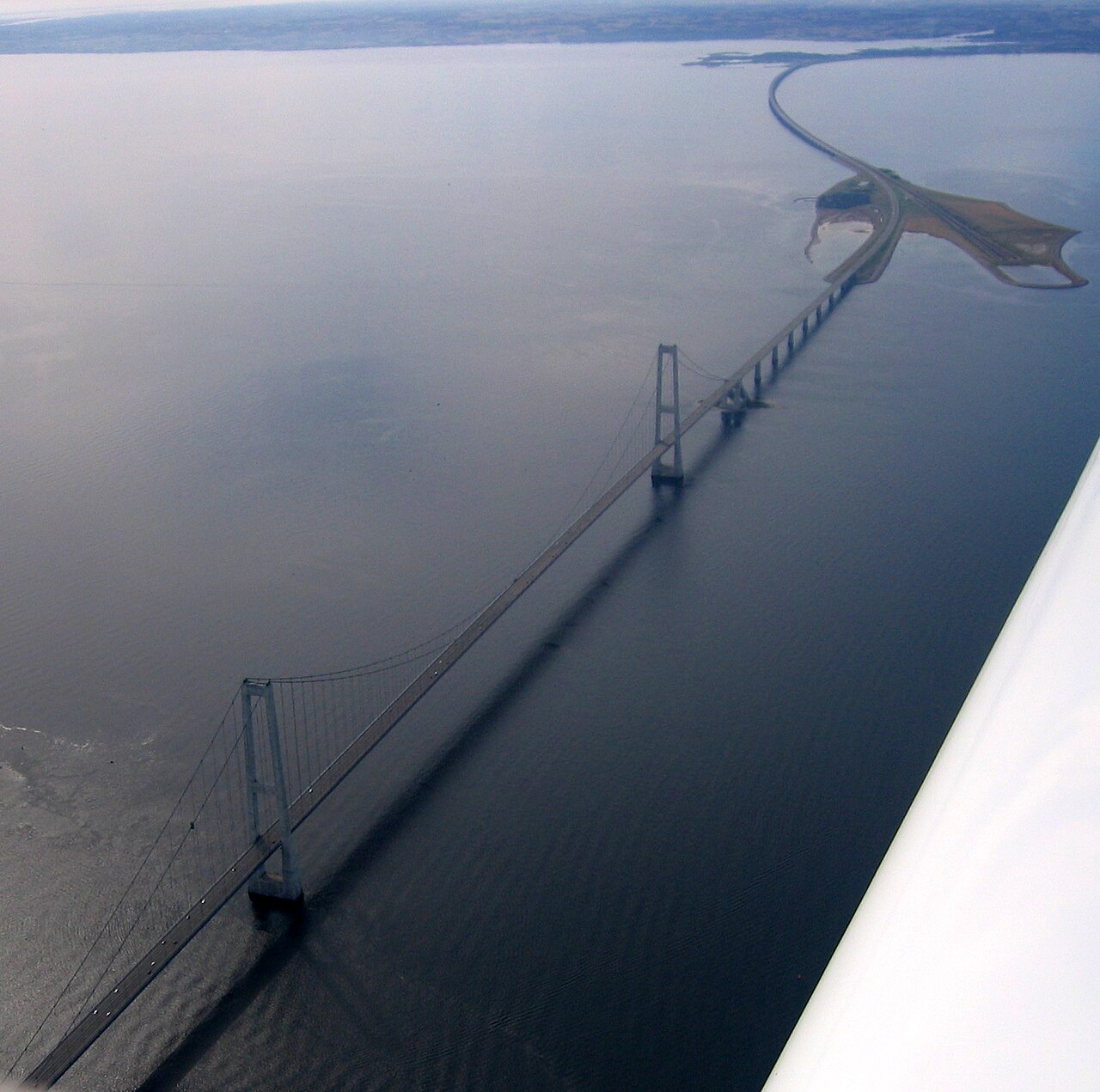
A suspension crossing of the Great Belt strait between Zealand and Funen, with a 1,624 m main span — for years the second-longest in the world, and still the longest outside Asia. The concrete pylons rise 254 m, the tallest structures in Denmark. Designed for high salinity, winds over 55 m/s, ship strikes, and a navigation clearance of 65 m to let cruise ships pass under.
Great Seto Bridge
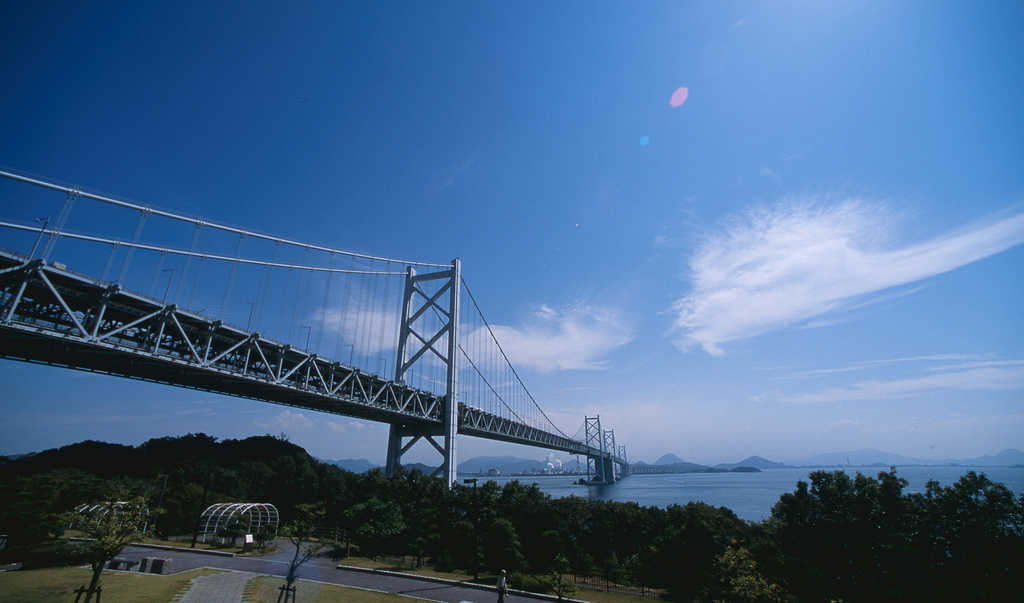
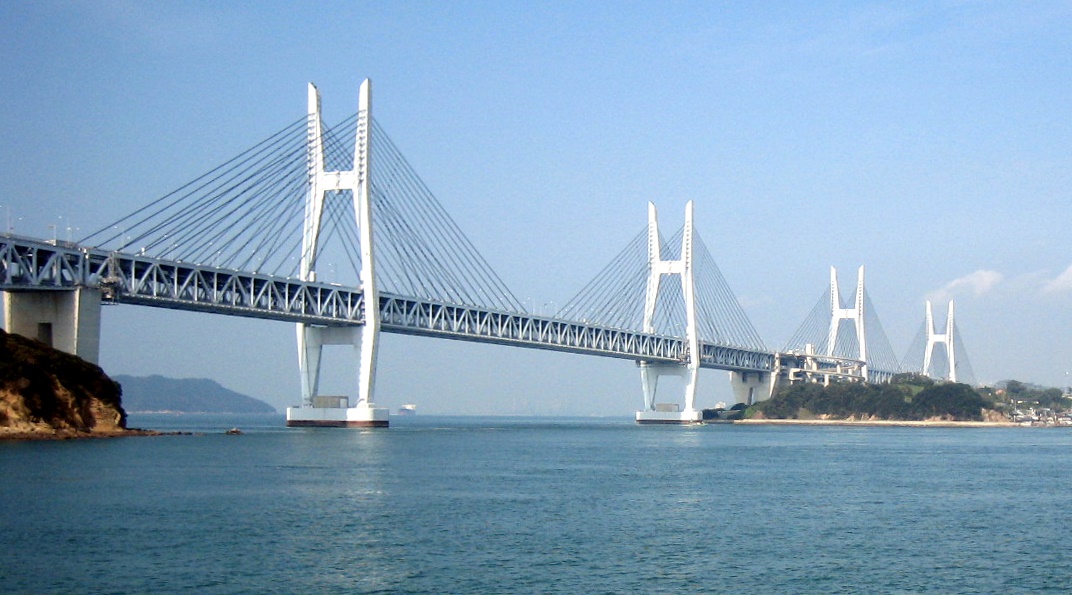
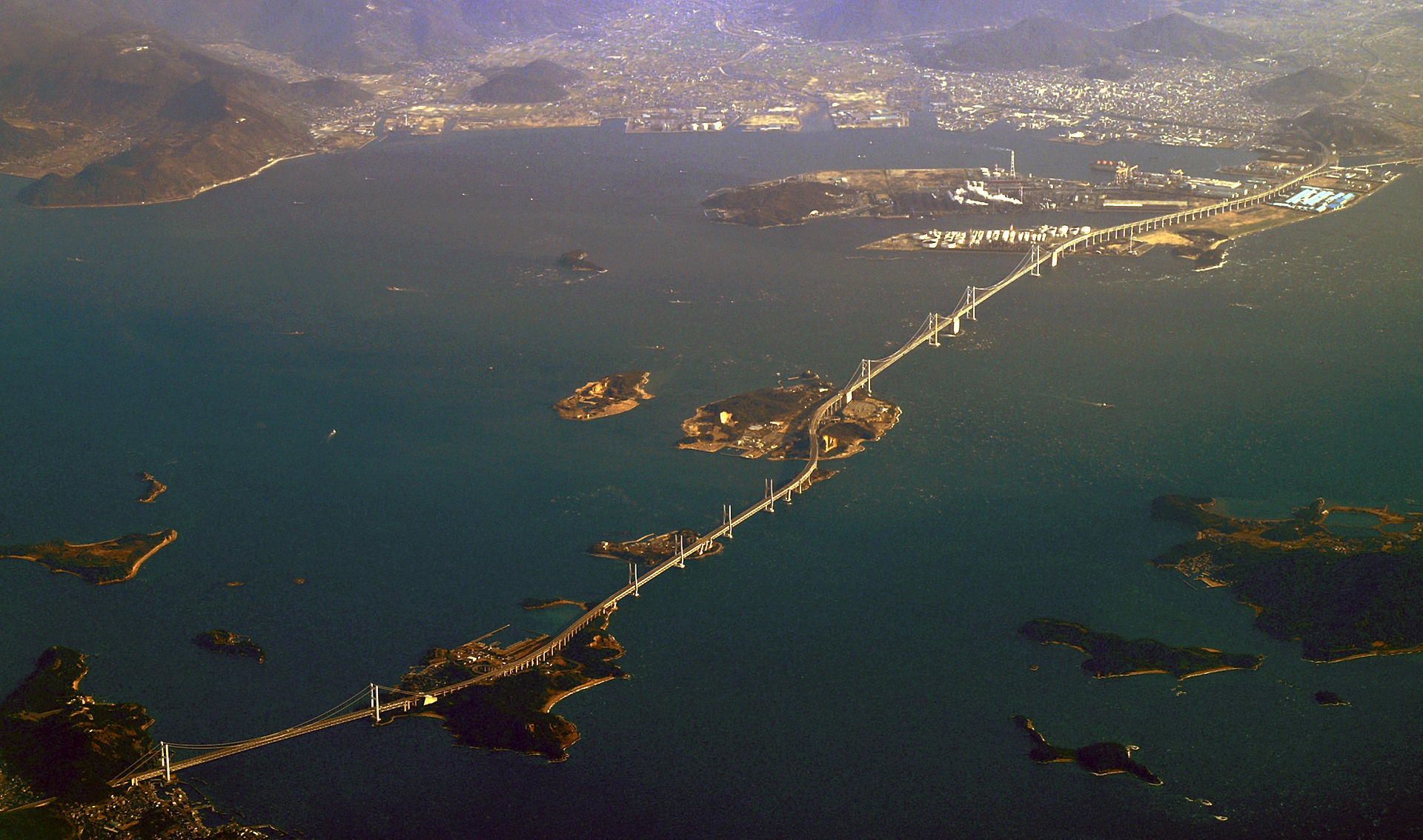
A 13.1 km chain of six bridges hopping five small islands across the Seto Inland Sea between Honshu and Shikoku — three suspension bridges, two cable-stayed, one truss, all working as a single system. The longest span, the Minami Bisan-Seto, is 1,100 m. Built for typhoons, earthquakes up to magnitude 8.5, and tidal currents in active shipping channels.
1915 Çanakkale Bridge
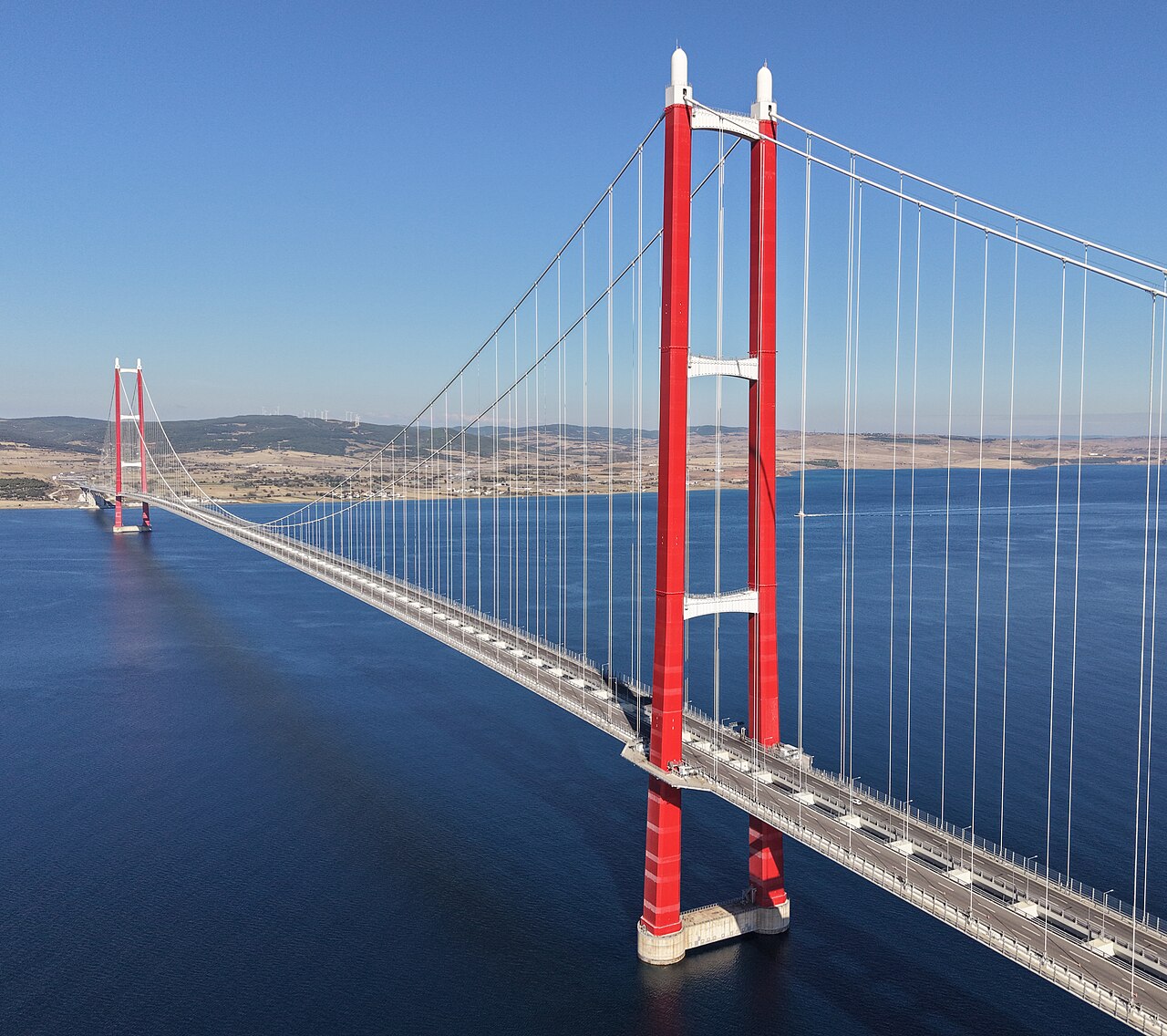
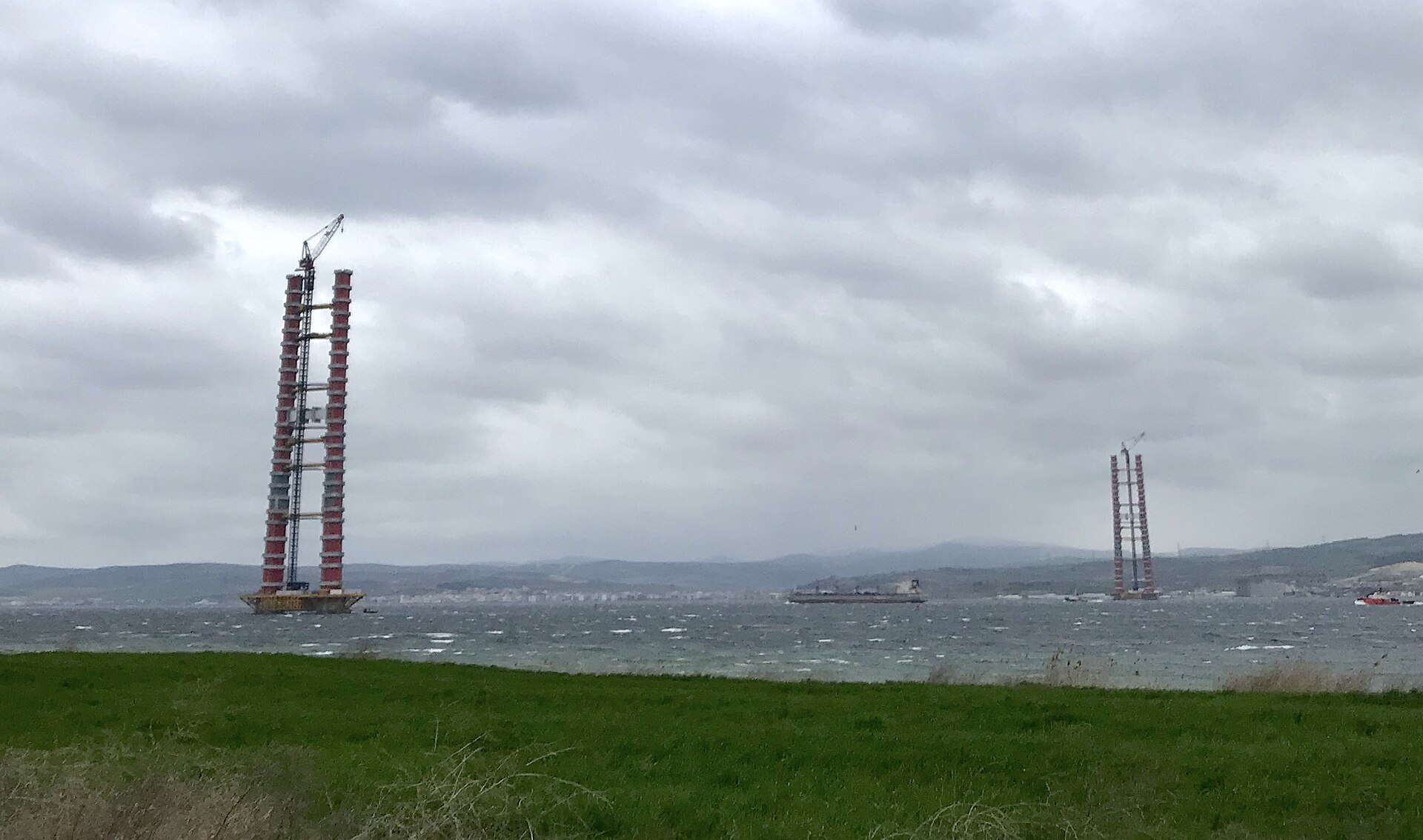
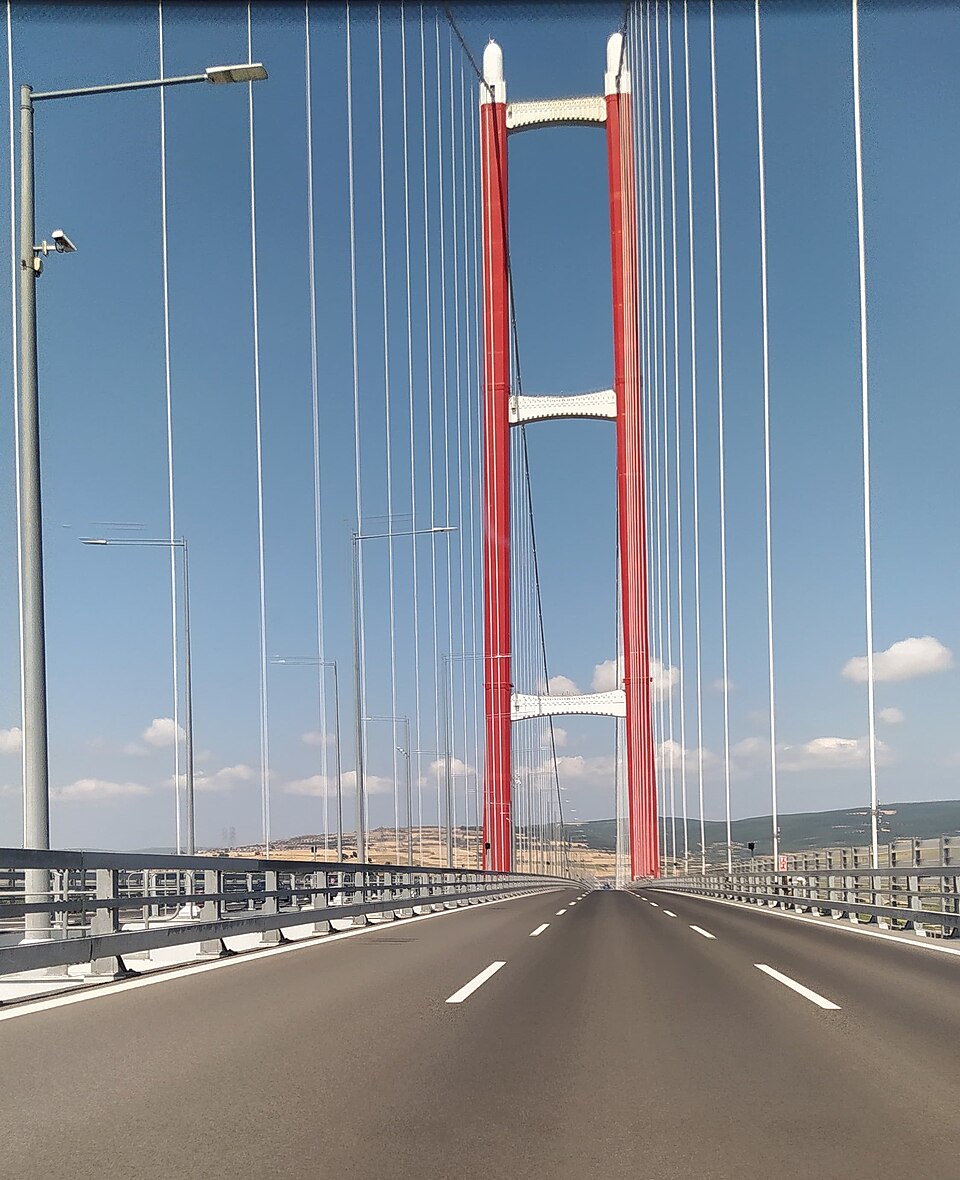
The longest suspension bridge in the world, with a 2,023 m main span across the Dardanelles between Gelibolu and Lapseki — beating the Akashi Kaikyō by 32 m. Towers 318 m high, total length 4,608 m including approach viaducts.
Sample routes
Assuming a four lane alignment connecting to SH1 north of Wellington, and the same alignment extending from the bridge arrival through to Picton.
| Drive time | Route |
|---|---|
| 1.5 h | Picton → Porirua |
| 2.5 h | Havelock → Greytown |
| 2.5 h | Blenheim → Martinborough |
| 3 h | Wellington → Nelson |
| 3 h | Kaikōura → Kāpiti |
| 3.5 h | Stoke → Levin |
| 5 h | Reefton → Feilding |
| 5.5 h | Westport → Palmerston North |
| 6 h | Napier → Hanmer |
| 9 h | Hamilton → Rangiora |
| 12 h | Taupo → Queenstown |
| 12 h | Auckland → Christchurch |
Frequently Asked Questions
Why a bridge not a tunnel?
A tunnel would be very deep, very long, and pass through faultlines (that the bridge can fly over). A failure in the rock above floods the entire tunnel.
And most importantly, no one takes selfies in the Chunnel. The Sydney Harbour Tunnel doesn't feature in a million holiday snapshots.
What about earthquakes?
The deck of the bridge (where the roadway goes) would be connected by flexible bearings and base isolators (similar to how Te Papa works) so that the towers can move separately from the roadway in an earthquake.
What about the wind?
The wind in Cook Strait can be vicious, and in sustained winds of over 150kmh the bridge would have to be closed. The Millau Viaduct has strong winds, and the sides of the bridge are shaped to break the wind and make travel comfortable in a Citroen 2CV. Your grans toyota vitz will be fine.
It's rough in Cook Strait, how would you build there?
Similar to how the Norwegians use their fiords to build huge drilling rigs that are towed out to sea, we would construct each of the giant pylons (100-300m high including the foundation) in the sounds, and then wait for a weather window (5 days of good weather) to tow out the pylon into place, sink it to the bottom of the strait, and then drill and concrete it into place. By doing the majority of fabrication in a sheltered bay with good road connections, we can provide demanding, technical, skilled work to thousands of workers in the marlborough region.
What is the cost benefit ratio?
All New Zealand projects must have a cost benefit ratio calculated to proceed. I think that is not the framework to calculate the benefits of the bridge. The benefit is to our cohesiveness as a nation, in our pride in our ability to build things. In using our problem solving, hard work, mahi, our number 8 wire mentality and our sense of wanting to all pull in the same direction.
Massively improving transport links, resilience, and increasing labour mobility would be benefits. On top of that, is job creation, skill development and the development of institutional knowledge. Re-organising the way we build large projects so that we don't lose the skills we create, but instead go on to build more projects, more successfully.
Why build a bridge?
This is an epic project, one that appears daunting at the outset. But this is a project that we could achieve. We have the engineering skill. We have the grit, determination, ingenuity and temerity to build it. An epic project. First we uncover why we can't build things, then we fix those problems by building the biggest thing. It'd be an epic achievement that we would be known for globally.
“Those crazy Kiwis built a bridge between their islands”
The day we open the bridge would be like winning the Rugby World Cup, The Americas Cup, The Ashes, The Netball World Cup and The World Rally Championship all at once.
What about Stewart Island?
This is left as an exercise to the reader.